
A Stuck Garage Door Is More Than an Inconvenience
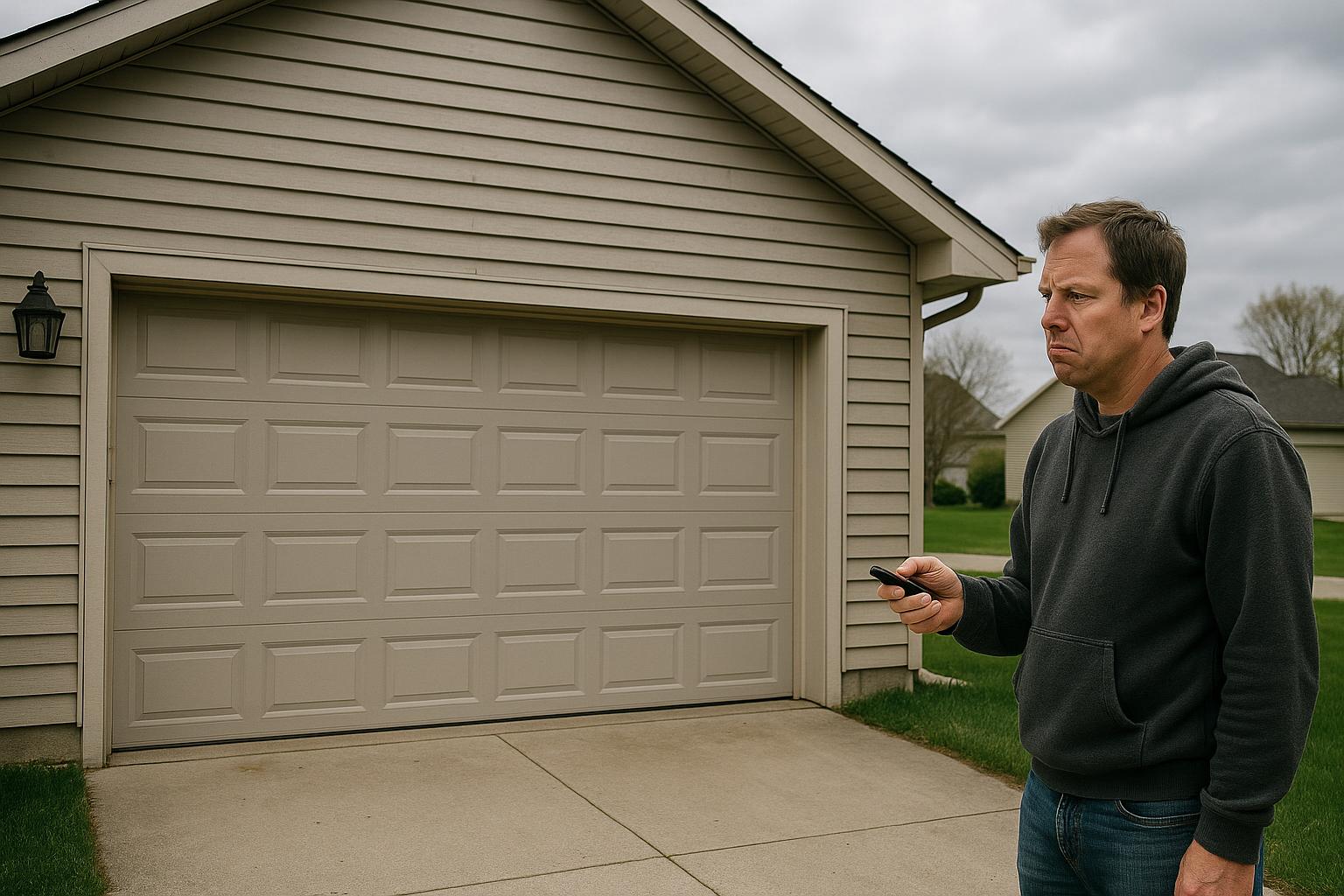
You're running late for work, you press the button on your garage door opener, and nothing happens. Or maybe the door starts moving and then reverses for no apparent reason. Few household malfunctions are as immediately frustrating as a garage door that refuses to cooperate.
For homeowners in Macomb and the surrounding communities, a non-functioning garage door isn't just an inconvenience — it can be a security risk and a safety hazard. Your garage door is likely the largest moving component in your home, and when it stops working, you need answers fast.
Before you panic or start searching for a sledgehammer, let's walk through the most common reasons your garage door won't open or close and what you can do about each one.
1. Check the Most Obvious Things First
It sounds almost too simple, but you'd be surprised how often the fix is something basic. Before diving into mechanical troubleshooting, run through this quick checklist:
- Is the opener plugged in? Power cords can get bumped loose, especially if you use your garage as a workspace or storage area.
- Did the circuit breaker trip? Check your electrical panel for a tripped breaker dedicated to the garage.
- Are the remote batteries dead? Swap in fresh batteries and try again. If the wall-mounted button works but the remote doesn't, you've found your culprit.
- Is the lock engaged? Some garage doors have a manual lock mechanism. If it's accidentally engaged, the opener will strain against it and fail to move the door.
These quick checks take less than five minutes and solve the problem more often than most people expect.
2. Look at the Photo-Eye Sensors
Modern garage door openers are equipped with photo-eye sensors mounted near the bottom of the door tracks on either side. These sensors project an invisible beam across the doorway, and if anything breaks that beam — a trash can, a bicycle, a leaf — the door will refuse to close as a safety precaution.
Here's what to check:
- Alignment: The sensors need to face each other directly. If one has been bumped or shifted, the beam won't connect. Gently adjust them until the indicator lights on both sensors are steady (not blinking).
- Dirt and debris: Wipe the sensor lenses with a soft cloth. Dust, cobwebs, and grime can block the beam.
- Sunlight interference: In some cases, direct sunlight can overwhelm the sensor. If your garage faces south or west, this can be a seasonal issue here in Macomb during certain times of day.
If the sensors appear fine but the door still won't close, the wiring connecting the sensors to the opener unit may be damaged and should be inspected by a professional.
3. Inspect the Tracks and Rollers
Your garage door travels along metal tracks on both sides. If those tracks are bent, obstructed, or misaligned, the door can get stuck partway or refuse to move at all.
Visually inspect the tracks for:
- Visible dents or bends in the metal
- Debris like small rocks, dirt buildup, or ice (common during Michigan winters)
- Gaps between the track and the wall-mounted brackets
The rollers themselves can also wear out over time. Nylon rollers tend to crack, and steel rollers can rust or lose their ball bearings. If you notice a roller that looks damaged or hear a grinding sound when the door attempts to move, roller replacement is likely needed.
Important: Do not attempt to adjust the tracks yourself by loosening the brackets. Improperly adjusted tracks can cause the door to fall, which is extremely dangerous.
4. The Door Opens Partially Then Stops
If your garage door starts to open but stops after a few inches or reverses, the issue is often related to the opener's travel limits or force settings. These are adjustable settings on the opener unit that tell the motor how far to move the door and how much resistance to allow before reversing.
Over time, these settings can drift or need recalibration, especially after a spring replacement or if the door has been serviced. Your opener's manual will explain how to adjust these settings, but if you're not comfortable doing it yourself, a technician can recalibrate them quickly.
Another possibility is a problem with the springs or cables. If a spring has weakened significantly, the opener motor may not have enough assistance to lift the full weight of the door. The motor strains, hits its force limit, and reverses as a safety measure.
5. The Opener Motor Runs But the Door Doesn't Move
When you hear the motor humming but the door stays put, the most likely cause is a disengaged trolley. Most garage door openers have an emergency release cord — usually a red handle hanging from the rail. If this has been pulled, the door is disconnected from the opener's drive mechanism.
To re-engage it, simply pull the cord back toward the opener unit and then activate the opener with your remote or wall button. The trolley should reconnect automatically as the carriage moves along the rail.
If the trolley is engaged and the motor still runs without moving the door, the drive gear inside the opener may be stripped. This is a common wear item, particularly in openers that are ten or more years old. A garage door technician can replace the gear without replacing the entire opener in most cases.
6. The Remote Works From Some Distances But Not Others
If your remote only works when you're very close to the garage, the issue is usually related to the antenna on the opener unit. Make sure the antenna wire is hanging down and isn't damaged or coiled up. In some cases, nearby electronics or LED light bulbs installed in the opener can interfere with the remote's signal frequency.
Try switching to a different type of bulb or repositioning any electronics near the opener to see if range improves.
When to Call a Professional
Some garage door issues are safe to troubleshoot on your own, but others require professional expertise and specialized tools. You should call a garage door technician if:
- You suspect a broken spring or cable — these components are under extreme tension and can cause serious injury.
- The tracks are visibly bent or pulled away from the wall.
- The door is off its tracks entirely.
- You've tried basic troubleshooting and the problem persists.
- The opener motor is making burning smells or unusual sounds.
At Macomb Garage Door Specialists, we serve homeowners across Macomb, Shelby Township, Clinton Township, Sterling Heights, Utica, and Chesterfield with fast, honest garage door repair. Whether it's a sensor alignment issue or a complete opener replacement, we diagnose the problem accurately and fix it the first time.
Don't Let a Stuck Door Ruin Your Day
A garage door that won't open or close is stressful, but it's rarely a mystery. Most issues come down to a handful of common causes — dead batteries, misaligned sensors, worn rollers, or opener malfunctions. By working through the troubleshooting steps above, you can often identify the problem and decide whether it's a quick DIY fix or something that needs professional attention.
If you're in the Macomb area and your garage door has you stumped, give us a call. We offer same-day service and emergency repairs because we know a stuck garage door can't wait.