
Grab a can of WD-40, spray every moving part on the garage door, and call it done. That's what most homeowners do, and it's an easy mistake to make — WD-40 is sitting on every garage shelf in Macomb, it's cheap, and spraying something that smells like "maintenance" feels productive. The problem is that WD-40 is a water displacer and light solvent, not a lubricant. It cleans off old grease and dirt, but it evaporates fast and leaves metal parts drier than before you started. In a Michigan winter, that means more friction right when cold temperatures are already making everything stiffer and harder on the opener.
Lubricating a garage door the right way takes fifteen minutes, a few dollars in supplies, and some attention to which parts actually need grease versus which ones should stay dry. Here's how to do it properly, plus where the line is between a homeowner task and a job for a technician.
Tools and Products You'll Need
- A silicone-based or lithium-based garage door lubricant (sold specifically for garage doors)
- A clean rag or shop towel
- A stiff brush or old toothbrush (for cleaning tracks)
- A step stool or ladder
- Work gloves
Step-by-Step: How to Lubricate Your Garage Door
- Disconnect the opener and close the door manually. Pull the red release cord so you can move the door by hand. This lets you work on it safely without the motor engaging.
- Wipe down the tracks first — don't lubricate them. Use a dry rag to clear out dust, dried mud from spring thaw, and the gritty residue that road salt and winter grime leave behind on anything stored near a garage entrance. Tracks should stay clean and dry; lubricating them attracts more dirt and can make the rollers slip.
- Lubricate the rollers. Apply a small amount of silicone or lithium spray to the bearings at the center of each roller, not the wheel surface itself. Spin each roller by hand to work the lubricant in.
- Lubricate the hinges. Spray each hinge where metal pivots against metal. These take a beating from repeated opening and closing, especially in a Michigan winter when cold metal contracts and moves less smoothly.
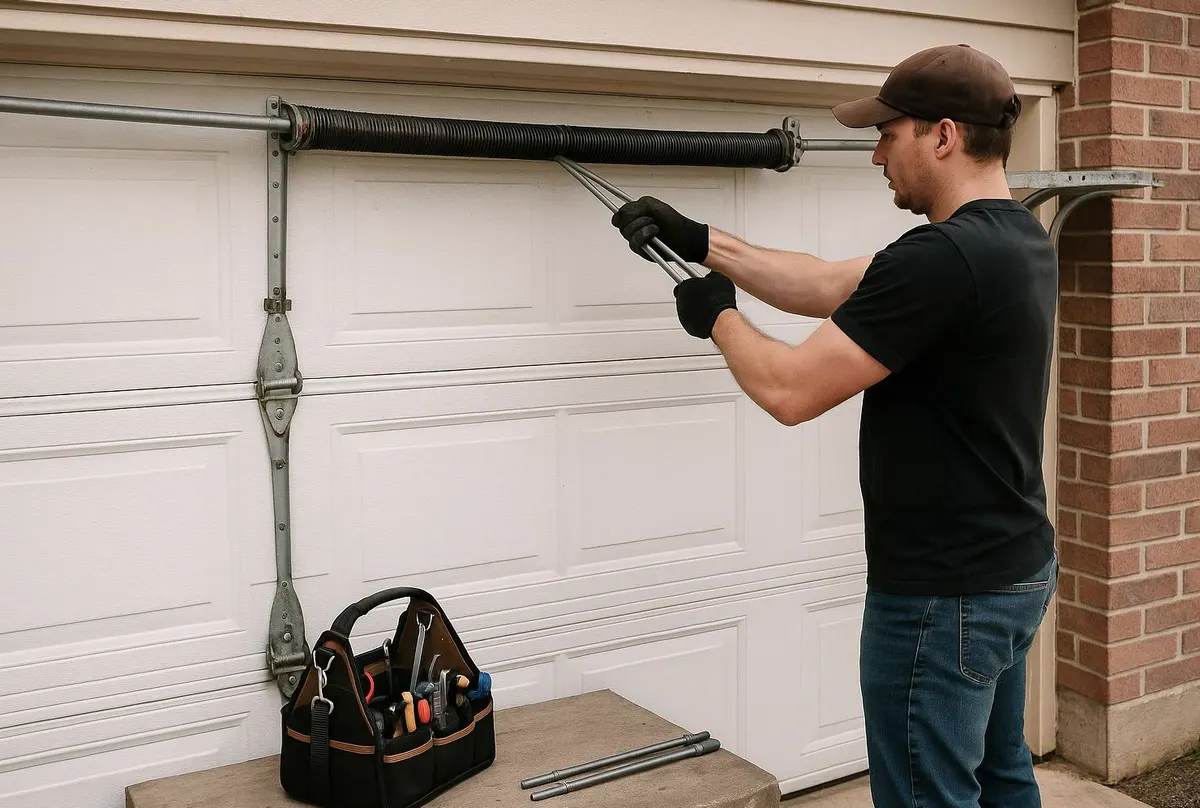
- Coat the springs lightly. A thin layer of lubricant on the torsion spring helps prevent rust, which is a real concern given the humidity and road salt carried into garages across Sterling Heights, Clinton Township, and the rest of the area. Do not overdo it — a light coat is enough, and heavy buildup just collects dust.
- Lubricate the top rail and arm bar. If your opener has an exposed metal rail (chain or screw drive), apply lubricant along its length per the manufacturer's instructions. Belt-drive openers generally need no lubrication on the belt itself.
- Apply a small amount to the lock mechanism if your door has one, so it doesn't seize up in freezing temperatures.
- Wipe away excess. Any lubricant that drips or pools will just attract dirt and grit. A clean finish lasts longer than a heavy one.
- Reconnect the opener and test the door. Run it up and down a few times and listen. It should sound noticeably quieter and move more smoothly than before.
Products to Use — and Products to Avoid
Use: Silicone-based sprays and white lithium grease are the standard for garage door hardware. Both hold up well across temperature swings, which matters in a region that goes from summer humidity to deep winter cold within a few months. Look for products labeled specifically for garage doors, overhead doors, or general machinery lubrication.
Avoid:
- WD-40 as a long-term lubricant. It's fine for loosening a stuck bolt or displacing moisture in a pinch, but it isn't formulated to lubricate moving parts long-term.
- Petroleum-based grease on rollers and tracks — it thickens in cold weather and attracts dust and grit, which is a real problem when winter road salt and sand end up tracked into the garage.
- Any lubricant on the tracks themselves. This is the most common overcorrection homeowners make once they learn lubrication matters. Lubricated tracks cause rollers to slide instead of roll, which wears them out faster.
- Heavy oils that can drip onto a vehicle, driveway, or concrete floor and stain it.
How Often to Lubricate
Twice a year is a good baseline for this climate — once in the fall before the hard cold sets in, and once in the spring after thaw and mud season has run its course. If your garage sees heavy daily use, or your door has started squeaking, closer to every three to four months keeps things running smoothly.
What's DIY and What Isn't
Lubricating rollers, hinges, tracks (cleaning only), and the lock mechanism is a reasonable homeowner task. Where you should stop:
- Torsion springs under tension. Lubricating the spring itself is fine; adjusting, tightening, or replacing it is not. These are under extreme tension and have caused serious injuries when handled without the right tools and training.
- Opener gears and internal chain drive housings. If the noise or stiffness is coming from inside the opener unit itself rather than the visible hardware, that's a sign of wear that lubrication won't fix.
- Cables and pulleys. These are also under tension and are best left to a technician, especially if you notice fraying.
If lubrication doesn't quiet things down, or if you notice grinding, jerking, or uneven movement after a proper lube job, that usually points to a worn part rather than a dry one.
When to Call Macomb Garage Door Specialists
If you've lubricated everything correctly and the door still struggles, hesitates, or makes noise, it's time to call in a technician rather than keep guessing. Our preventive maintenance visits cover a full inspection of springs, cables, and opener components that go beyond what a homeowner can safely check, and we handle spring repair & replacement on the spot when a spring has stretched, rusted, or lost tension. We show up on time and treat every job like it's our own home.
If your garage door needs more than a fresh coat of lubricant, give Macomb Garage Door Specialists a call. We serve Macomb, Shelby Township, Clinton Township, Sterling Heights, Utica, Chesterfield, Washington Township, and Romeo, and we're ready to help before winter settles in for good.