
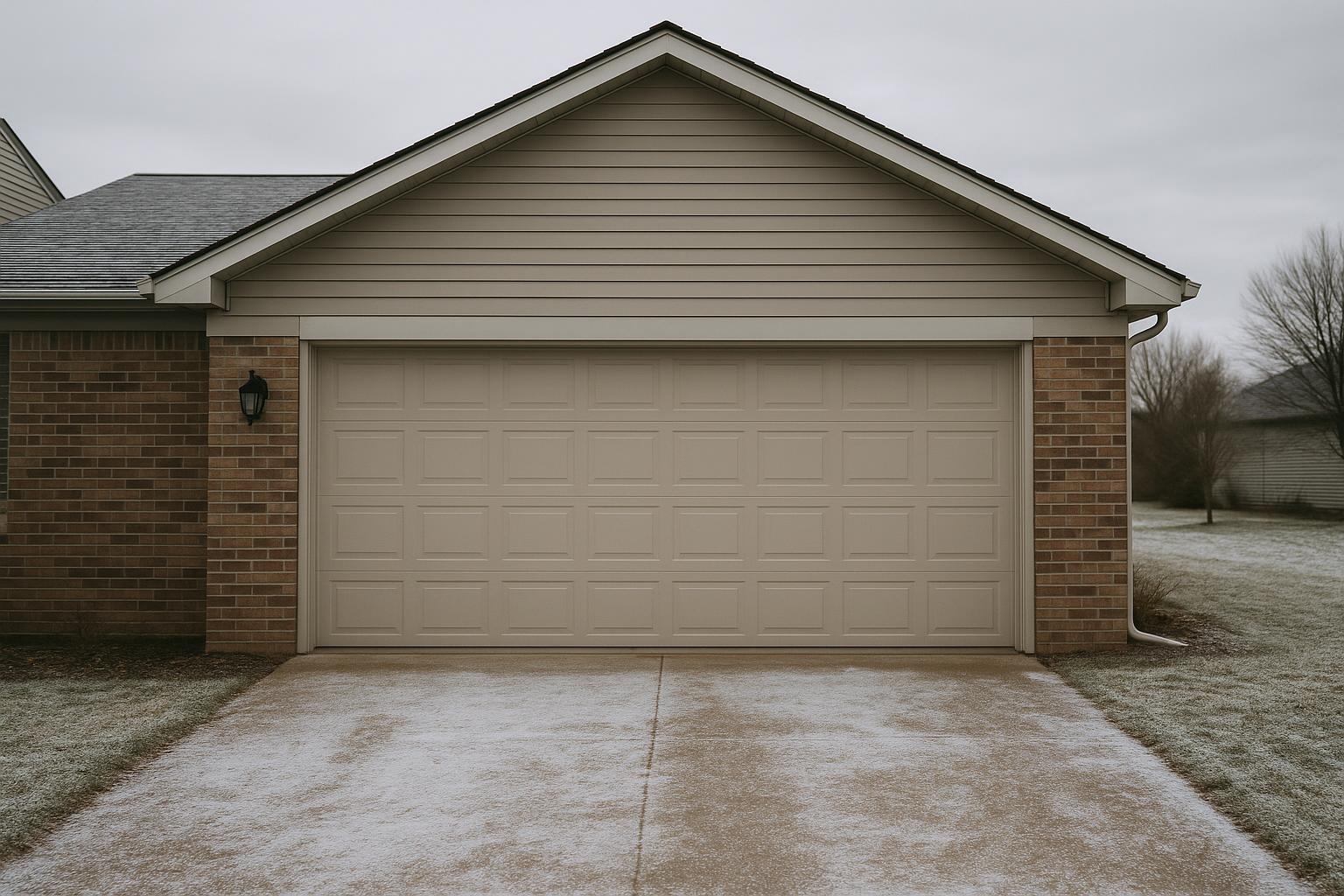
Why Winterizing Your Garage Door Matters in Macomb
If you've lived in Macomb for even one winter, you know what the cold can do to just about everything — your car, your pipes, and yes, your garage door. When temperatures drop below freezing and snow starts piling up, your garage door takes a beating. Metal contracts, lubricant thickens, weatherstripping cracks, and suddenly the door that worked perfectly in September is sluggish, noisy, or stuck in January.
The good news is that a little preparation before winter arrives can save you from costly emergency repairs and keep your garage — and your home — warm and functional all season. Here's a step-by-step guide to winterizing your garage door the right way.
Inspect and Replace Worn Weatherstripping
The rubber weatherstripping along the bottom and sides of your garage door is your first line of defense against cold air, snow, ice, and even pests looking for a warm place to hide. Over time, this material dries out, cracks, and loses its ability to form a tight seal.
Walk around the inside of your closed garage door and look for:
- Visible cracks or tears in the rubber seal
- Gaps where daylight is visible between the door and the frame
- Sections where the seal has pulled away or gone missing entirely
- Signs of water, snow, or debris getting inside the garage
Replacing weatherstripping is relatively affordable and makes a noticeable difference in keeping your garage warmer. If you're not sure what type of seal your door needs, a local garage door technician can help you find the right fit.
Lubricate All Moving Parts
Cold weather causes metal components to contract, which increases friction between moving parts. This is one of the main reasons garage doors become noisy and sluggish during winter. Before the first freeze, apply a silicone-based or lithium-based garage door lubricant to the following:
- Hinges
- Rollers (if they're metal, not nylon)
- Springs — both torsion and extension
- The track where the rollers travel
- The lock mechanism
Important: Avoid using WD-40 as a long-term lubricant. While it's great for loosening stuck parts, it's not designed to provide lasting lubrication in freezing conditions. A proper garage door lubricant will hold up much better through a Michigan winter.
Test the Balance of Your Garage Door
An unbalanced garage door puts extra strain on your opener and springs, and cold weather can make an existing imbalance worse. To test the balance:
- Disconnect the automatic opener by pulling the release handle.
- Manually lift the door about halfway and let go.
- If the door stays in place, it's properly balanced. If it slides up or down, the springs likely need adjustment.
Spring adjustment is not a DIY job. Garage door springs are under extreme tension and can cause serious injury if handled improperly. If your door fails the balance test, call a professional to inspect and adjust the springs before winter makes the problem worse.
Check and Tighten Hardware
Your garage door opens and closes over a thousand times a year, and all that movement loosens bolts, brackets, and screws over time. Before winter sets in, grab a socket wrench and tighten everything you can see — the brackets that hold the tracks to the wall, the bolts connecting the hinges, and the fasteners on the opener mounting bracket.
While you're at it, visually inspect the tracks for any dents, bends, or debris that could interfere with smooth operation. A misaligned track combined with freezing temperatures is a recipe for a door that gets stuck at the worst possible time.
Insulate Your Garage Door
If your garage door isn't insulated, your garage can feel almost as cold as the outdoors. This matters more than you might think — especially if your garage shares a wall with your living space, if you have water pipes running through the garage, or if you use the space as a workshop.
There are a few options for insulating a garage door:
- Insulation kits: Foam board or reflective insulation panels that attach directly to the inside of each door panel. These are available at most home improvement stores and are a solid DIY option.
- Upgrading to an insulated door: If your current door is old and uninsulated, winter might be the perfect time to invest in a new insulated garage door. Modern insulated doors offer significantly better R-values and can lower your energy bills while keeping your garage comfortable.
Homeowners in Macomb and surrounding communities like Shelby Township and Sterling Heights often notice a real difference in garage temperature after adding even basic insulation to their doors.
Test Your Garage Door Opener's Cold-Weather Performance
Automatic garage door openers can behave differently in the cold. Grease inside the motor can thicken, and older openers may struggle to lift a door that's stiff from freezing temperatures. Test your opener a few times before the worst of winter arrives and pay attention to:
- Slower-than-usual operation
- The motor straining or making unusual sounds
- The door reversing before fully closing
- The opener failing to respond to the remote or wall button
If your opener is more than 10-15 years old and already showing signs of struggle, it may be worth replacing it before it fails on a freezing morning when you need to get to work.
Prevent Your Garage Door from Freezing to the Ground
This is a classic Michigan winter problem. After a bout of freezing rain or melting-and-refreezing cycles, the bottom of your garage door can literally freeze to the ground. Forcing the door open in this situation can damage the weatherstripping, the door panels, or even the opener.
To prevent this:
- Keep the area where the door meets the ground clear of snow and standing water.
- Apply a thin layer of cooking spray or silicone spray to the bottom seal to reduce ice adhesion.
- If the door does freeze shut, use a heat gun or pour warm (not boiling) water along the base to gently melt the ice before attempting to open it.
Schedule a Professional Pre-Winter Inspection
The most effective way to winterize your garage door is to have a professional inspect the entire system before the cold arrives. A trained technician can catch problems you might miss — worn cables, weakening springs, alignment issues, or opener malfunctions that are about to get worse in freezing conditions.
At Macomb Garage Door Specialists, we offer preventive maintenance services designed to keep your door running smoothly year-round. We'll inspect every component, lubricate moving parts, test the balance and safety features, and let you know if anything needs attention before it becomes an emergency.
Don't Wait for the First Freeze
Winter garage door problems are almost always easier and cheaper to prevent than to fix after the fact. A stuck door on a freezing morning, a broken spring in the middle of a snowstorm, or an opener that quits when it's ten degrees outside — these are the kinds of headaches that a little fall preparation can help you avoid.
If you're in Macomb, Clinton Township, Chesterfield, or anywhere nearby, give us a call to schedule a pre-winter inspection. We'll make sure your garage door is ready to handle whatever this Michigan winter throws at it.