
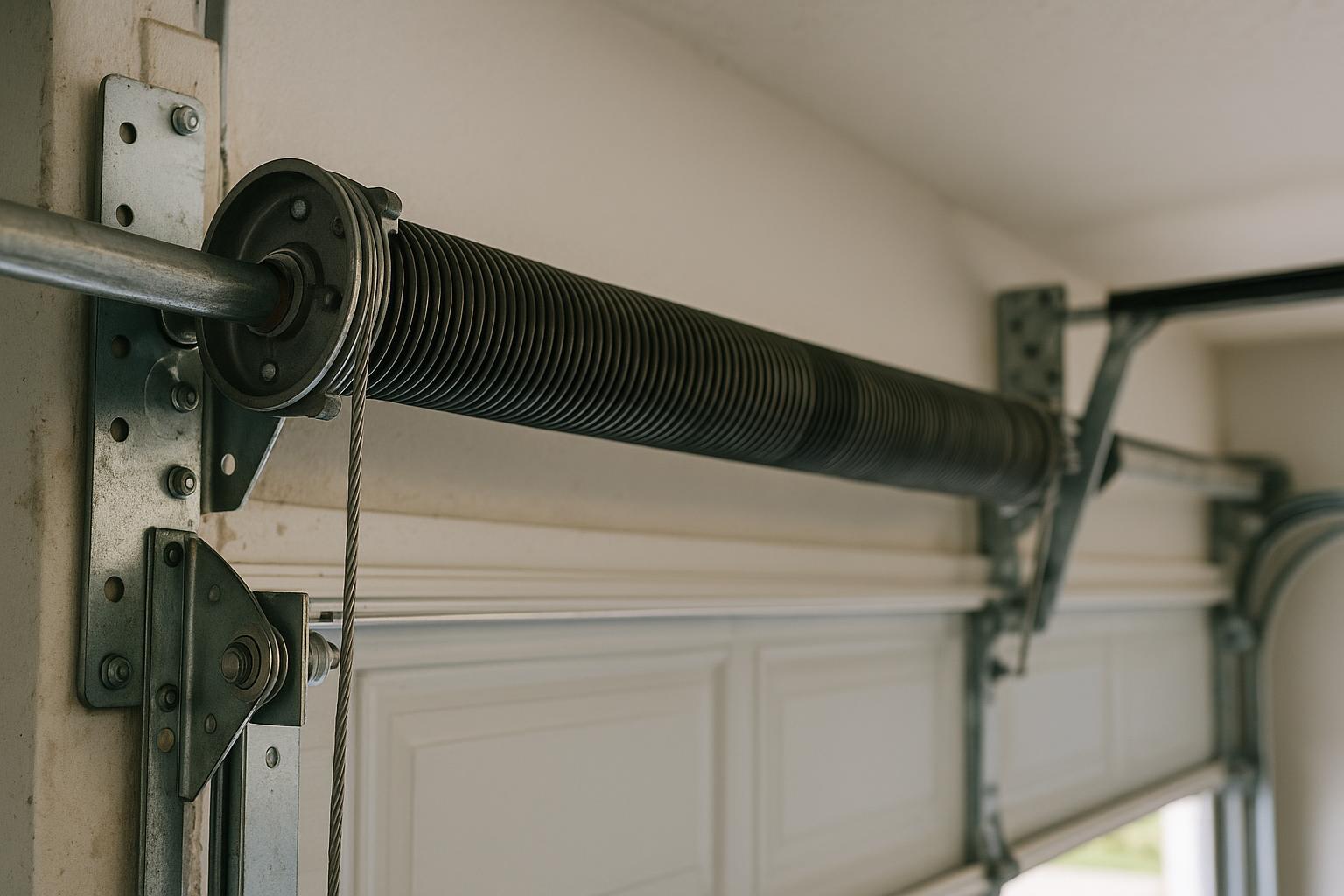
Your Garage Door Springs Are Working Harder Than You Think
Every time you open and close your garage door, the springs do the heavy lifting — literally. A standard torsion spring is rated for about 10,000 cycles, which means if you use your garage door four times a day, those springs could wear out in roughly seven years. For many homeowners in Macomb, that timeline sneaks up fast.
A broken garage door spring isn't just an inconvenience. It can leave your car trapped inside, create a serious safety hazard, and lead to damage to your opener or the door itself. The good news is that springs rarely fail without warning. If you know what to look for, you can catch the problem early and schedule a repair before you're stuck in your driveway on a Monday morning.
Why Garage Door Springs Fail
Garage door springs are under enormous tension. Over time, the metal fatigues from repeated use, temperature fluctuations, and exposure to moisture. Here in Macomb and the surrounding communities like Sterling Heights and Shelby Township, our Michigan winters put extra stress on springs. Cold temperatures cause the metal to contract and become more brittle, which is why spring failures tend to spike during the coldest months of the year.
Other factors that accelerate spring wear include:
- Rust and corrosion — Moisture in an unheated garage causes rust, which weakens the coils and increases friction.
- Lack of maintenance — Springs that aren't lubricated regularly wear out faster.
- Improper spring size — If the wrong springs were installed for your door's weight, they'll be overworked from day one.
- Frequent daily use — Families with multiple drivers or home businesses that open the door many times a day will reach that 10,000-cycle limit much sooner.
7 Warning Signs Your Garage Door Springs Are Failing
1. The Door Feels Heavier Than Usual
Try this simple test: disconnect your garage door opener by pulling the emergency release cord, then manually lift the door about halfway. A properly balanced door should stay in place on its own. If it feels extremely heavy or slams down the moment you let go, your springs have lost tension and are no longer supporting the door's weight properly.
2. The Door Opens Unevenly or Crooked
If your garage door tilts to one side as it opens, one spring may be weaker than the other. This is especially common on two-spring systems where one spring has more wear. An uneven door puts extra strain on your tracks, cables, and opener, which can lead to additional damage if left unaddressed.
3. You Hear Loud Squeaking or Grinding
Some noise is normal, but excessive squeaking, grinding, or popping sounds during operation often indicate that the springs are struggling. Worn coils create more friction and can produce alarming sounds that get progressively worse over time.
4. There's a Visible Gap in the Spring
This is the most obvious sign. Take a look at the torsion spring mounted above your garage door. If you see a gap or separation in the coils, the spring has already broken. Even a small gap means the spring is no longer functional and needs immediate replacement.
5. The Opener Struggles or Stops Mid-Cycle
Your garage door opener is designed to work with the springs, not replace them. When springs lose their lifting power, the opener has to compensate by working much harder. You might notice it straining, moving the door more slowly, or stopping partway through the cycle. If your opener keeps shutting off or reversing, worn springs could be the culprit.
6. Cables Are Loose or Hanging
The lift cables on either side of your garage door work in tandem with the springs. When a spring breaks, the cables can go slack or even unwind from the drums. If you notice loose, dangling, or frayed cables, there's a good chance the springs are to blame.
7. You Hear a Loud Bang From the Garage
Many homeowners in Macomb have told us they heard what sounded like a gunshot or firework coming from their garage. That sudden, loud bang is often the sound of a torsion spring snapping under tension. If this happens, do not try to operate the door. The spring has broken and the door is no longer safe to use until it's repaired.
What to Do If You Suspect a Spring Problem
First and foremost, do not attempt to repair or replace garage door springs yourself. This is one of the most dangerous DIY projects a homeowner can take on. Torsion springs are wound under extreme tension, and improper handling can result in serious injury. Every year, emergency rooms treat thousands of injuries related to garage door spring repairs gone wrong.
Here's what you should do instead:
- Stop using the door — If you suspect a spring issue, avoid operating the door with the opener or manually. Using a door with a broken or failing spring can cause the door to drop unexpectedly.
- Disconnect the opener — Pull the emergency release cord to disconnect the opener from the door. This prevents the motor from trying to lift a door that the springs can no longer support.
- Call a professional — A trained garage door technician can safely assess the springs, determine the correct replacement parts, and have your door operating smoothly again, usually within the same visit.
Can You Extend the Life of Your Springs?
Absolutely. A little preventive care goes a long way. Here are a few things you can do to get the most life out of your garage door springs:
- Lubricate the springs every three to four months with a silicone-based garage door lubricant. This reduces friction and helps prevent rust.
- Schedule annual maintenance — A professional tune-up includes spring inspection, balance testing, and adjustments that can catch problems before they become failures.
- Keep your garage insulated — Reducing temperature extremes inside the garage helps protect the metal components from the stress of constant expansion and contraction.
- Consider high-cycle springs — If you're replacing springs, ask about upgraded options rated for 25,000 or even 50,000 cycles. The upfront cost is slightly higher, but the extended lifespan makes it a smart investment.
Don't Wait for a Breakdown
If you've noticed any of the warning signs we've covered, it's worth getting your springs inspected sooner rather than later. A proactive repair is always less expensive and less stressful than an emergency call when you're locked out of your own garage.
At Macomb Garage Door Specialists, we help homeowners across Macomb, Clinton Township, Utica, Chesterfield, and the surrounding areas keep their garage doors running safely and reliably. Whether you need a spring replacement, a full inspection, or just want a professional opinion on that strange noise your door has been making, we're here to help. We show up on time, explain what we find, and never push services you don't need.
Give us a call today to schedule a spring inspection — and get ahead of the problem before it gets ahead of you.